
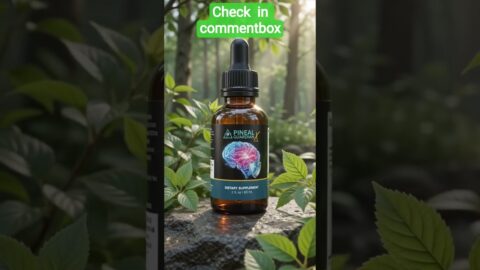
Click Here: Official pineal guardian x Website
Click Here: Official pineal guardian X Website
Click Here: Official Pineal Guardian X Website
✨ UNLOCK YOUR BRAIN’S FULL POTENTIAL! My free 2-minute quiz reveals your unique “Brain Operating System” and gives you a personalized guide to master your focus, handle stress, and perform at your best. Take the Quiz →
Want to boost your memory but overwhelmed by supplement hype? In this video, I share 5 science-backed brain supplements that actually support memory—and 3 to avoid. You’ll also learn how to choose quality products, when to test for deficiencies, and how to build a supplement plan that works.
References
Külzow, Nadine et al. “Impact of Omega-3 Fatty Acid Supplementation on Memory Functions in Healthy Older Adults.” Journal of Alzheimer’s disease : JAD vol. 51,3 (2016): 713-25. doi:10.3233/JAD-150886
Nakazaki, Eri et al. “Citicoline and Memory Function in Healthy Older Adults: A Randomized, Double-Blind, Placebo-Controlled Clinical Trial.” The Journal of nutrition vol. 151,8 (2021): 2153-2160. doi:10.1093/jn/nxab119
Uwitonze, Anne Marie, and Mohammed S Razzaque. “Role of Magnesium in Vitamin D Activation and Function.” The Journal of the American Osteopathic Association vol. 118,3 (2018): 181-189. doi:10.7556/jaoa.2018.037
Disclaimer: All of the information on this channel is for educational purposes and not intended to be specific/personal medical advice from me to you. Watching the videos or getting answers to comments/question, does not establish a doctor-patient relationship. If you have your own doctor, perhaps these videos can help prepare you for your discussion with your doctor.
Click Here: Official Pineal Guardian X Website
Click Here: Official Pineal Guardian X Website






You clearly enjoy what you do.
No, no, no, please make one with the things that work every time always preferably within minutes.
Run , more blood for your brain and cut sugar/ carbs . I was remembering bar code numbers
Be careful with these supplements some of them cause allergic reactions that can be life threatening
So which 3 are a waste of money?
Have tried Magnesium L-threonate can be pricey but it's very effective.
If you have an APOE 4 gene you cannot absorb triglyceride or other pill forms of Omega 3. You require the fish even if it's canned.
Thank you 🎉🎉🎉
Genuine question. Has anyone had luck with Lion's Mane Mushrooms Mycelium powder? If so, what did you notice and how long did it take to see results?
Yes, most all and my Vit D3 level was high, I had to drop off 2 days a week.
What does “supports” mean?
Also, there is no available “calcium” supplement shown to cross the blood-brain barrier in humans.
Not even in the brain injured ZEBRA FISH in which Calcium Threonate was studied.
Calcium is usable when it is obtained through food or released from bone tissue, and it goes through a complex conversion and is modified several different ways by a molecular pairing process—all managed naturally by the human body.
Then, a selective component derived from calcium, a specific calcium ION (that is not “calcium”), is useful to brain and cerebrospinal cells through a carefully regulated and highly selective process—that the body normally maintains all by itself.
People who through specimen analysis have been found to be calcium *deficient*, should consult their doctors about adjusting their diet to include certain calcium rich FOODS as a higher proportion of their dietary intake.
Save your money. Health care services are expen$ive. [Screenshot this before it gets…”moderated”…]
Great tips thank you Dr. T ❤
My neurologist recommended CQ10. I already take provigil. It has helped so much.
Appreciate this info Dr Tracy
Thank you.
Very good advice all around.
WhaWhat about ALCAR ( Acetyl-L-Carnitin)?
Polyphenols and Vitamin E (!)
The effort really shows.
I take 35 supplements, hoping one or 2 might extend my life. I figure since I’m 83 there’s not time to wait for gold standard research. I take them every 3 days in the hope that that will cover deficiencies but avoid overdosing. Cheaper, too.
Thankyou ❤
A great concise informative to the point
How about prevagen?
I found that Magnesium L-Threonate makes you stay awake, since your brain is, let's say, "falling into thought" easier.
In the video "3 Brain Supplements That Are a Waste of Money" by Dr. Tracey Marks (available on YouTube), she breaks down the science-backed supplements for memory versus the overhyped ones you should avoid:
The 5 Science-Backed Supplements for Memory & Brain Health
1. Omega-3 Fatty Acids (DHA & EPA) [01:20]
Why: DHA makes up ~30% of brain fat and maintains cell membrane flexibility, while EPA regulates brain inflammation [01:38].
Dose & Tips: 1,000–2,000 mg/day (higher ratio of DHA) [02:31]. Look for molecularly distilled triglyceride forms or high-quality vegan algae oil [03:02, 03:18].
2. Citicoline (CDP-Choline) [03:40]
Why: Helps produce acetylcholine (vital for learning, attention, and short-term memory) and supports brain energy metabolism [03:52].
Dose: 250–1,000 mg/day [04:43].
3. Vitamin D3 [05:08]
Why: Vitamin D receptors are found throughout brain areas responsible for memory, focus, and mood [05:14].
Tips: Choose D3 (better absorbed than D2) [06:23] and ensure adequate magnesium intake, as magnesium is required to activate Vitamin D [06:41].
4. B Vitamins (B6, B9 / Folate, B12) [06:56]
Why: Helps lower homocysteine levels to protect brain blood vessels [07:06]. Deficiencies are linked to brain fog and forgetfulness [07:22].
Tips: Opt for methylated forms (methylfolate and methylcobalamin) for better absorption [08:04].
5. Magnesium L-Threonate [08:33]
Why: The only form of magnesium shown to effectively cross the blood-brain barrier and enhance neuroplasticity [08:48, 09:03].
Dose: 1,500–2,000 mg/day (providing ~144 mg elemental magnesium) [09:23]. Best taken in the evening [10:06].
i've had a lot of ect 30 years ago. since then i've had severe memory problems and confusion. can any of these supplements you recommend help me with ny memory and brain function
So brain cognitive development
That’s very significant to hear” be patient brains don’t change overnight “
Doc what about creatine for women?
Can you take them with MEDICATION
Thankyou… I was about to buy ginkgo but won’t now
Are there vitamins that can help an adult with ADD?
if you are interested in smart drugs, modafinil also works.
Thanks. I appreciate you.
your thoughts on the active ingredient in Benadryl (HCL) for sleep. Or CBD?
One stop shop = HUPERZINE A…. PERIOD
What order should I take these supplements throughout the day. Also should I take any of them together besides magnesium and vitamin d? Which ones to take with and without food
Is a health food store the best place to buy supplements? I used to get them through the mail but was told extreme heat in hot months or from hot States kills a lot of the ingredients affect
How do you know what brands are quality
❤❤🙌🙏
Great content. Too little about too much which is what my Engllish teacher used to tell me when I wrote stuff, but on the right track. Lately I'm curious if the suppliments I'm taking are just creating expensive urine? Thanks for sharing! ♥
Dr Marks, Thank you so much for your information❤❤❤❤❤.
I've read that high dosages of creatine (10g daily)help to remove brain fog. I'm curious what your thoughts on that are?
You're always a joy to hear (and to see!😊)
Dr.Marks
I just love this doctor / her voice is so strong and confident !
This is great … I was wondering what was wrong with my memory lately… Thanks✌🏽
thank YOU for straight Talk.. no fluff or wasted time
Great Job Doc!! THANK YOU….
Oral B 12 absorption becomes an issue as intrinsic factor in the gut is lacking with aging
Type of magnesium matters & should be discussed as it matters a lot
Thank you Dr Tracy